Between Lunch and Dinner Lives a Ritual: Bringing the Weekend Merienda Back to Your Table
There's a gap in the day that American culture never quite figured out what to do with. Lunch is over by 1. Dinner won't happen until 6:30. And in between? We scroll, we snack on stale granola bars standing over the sink, we pretend we're not hungry.
Filipino families have known for centuries that this stretch of afternoon is not a void. It's an invitation.
It's called merienda (some say merienda cena when it leans toward an early evening affair), and it's less a snack and more a pause — a shared moment of coffee, conversation, and something warm from the oven or fresh from the fryer. And across Filipino-American communities from Daly City to Jersey City, it's having a genuine revival.
What Merienda Actually Is (And Isn't)
Merienda isn't dessert. It isn't appetizers. It lives in its own category entirely — a small but satisfying plate that carries you from lunch to dinner without ruining anyone's appetite. Think of it as the Spanish colonial gift that Filipino culture made entirely its own, the same way Spain gave us the siesta and we gave it our own heartbeat.
In the Philippines, merienda happens everywhere: at the office at 3 PM sharp, at the sari-sari store on the corner, at your tita's house unannounced. In the US, though, it almost disappeared — squeezed out by soccer practice, side hustles, and the general American allergy to sitting still.
Which is exactly why it's coming back. We're all a little starved for an excuse to gather that doesn't require a holiday or a birthday.
The Comeback Table: What to Serve
The beauty of a weekend merienda is that the menu is flexible, forgiving, and mostly make-ahead. Here's a starter lineup that works whether you're hosting eight people or just your own household:
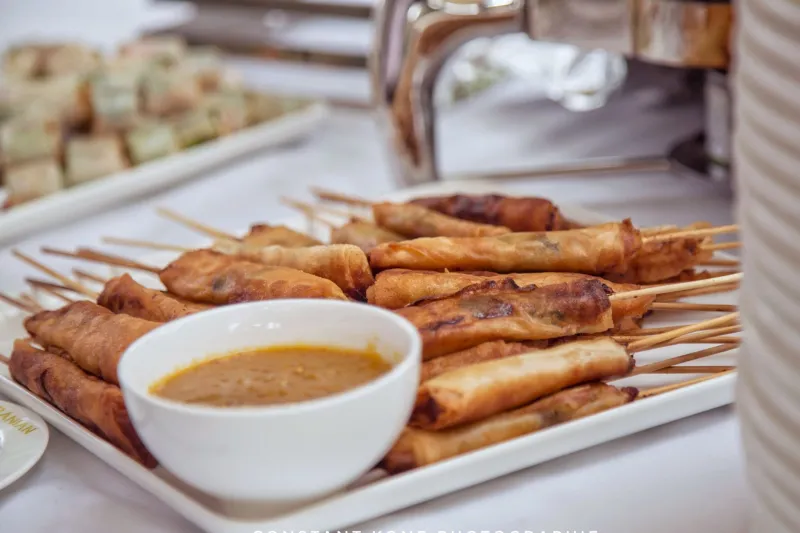
Lumpia Shanghai — The undisputed champion. Roll a big batch on Friday night, freeze them on a tray, and fry straight from frozen when guests arrive. Nobody needs to know they took you ten minutes of actual effort.
Pancit — A simple pancit Canton or bihon, cooked once and served room-temperature-friendly, stretches across a crowd and symbolizes long life, which feels like a nice thing to eat at 3 PM on a Saturday.
Turon — Banana and jackfruit in a spring roll wrapper, fried until caramelized and crisp. Pro move: assemble them ahead and fry to order so people experience that first shattering bite fresh.
Bibingka — This rice cake, traditionally baked in banana leaves, is the cozy, warm hug of the table. A muffin tin and a box of rice flour gets you shockingly close to what you remember.
Barako coffee or tsokolate — Merienda without a drink is just eating alone. Strong Filipino coffee or thick, tablea-style hot chocolate is non-negotiable for the full effect.
Make-Ahead Tips So You Actually Enjoy It
The fastest way to kill a tradition is to make it exhausting. A few things we've learned from aunties who host like it's an Olympic sport:
- The freezer is your co-host. Lumpia, turon, and even bibingka batter all hold beautifully. Do the work days ahead.
- One hot dish, everything else at room temp. You only need one thing coming off the stove to make it feel alive.
- Serve family-style, buffet-style, or not at all. No plating. No courses. Put it all out and let people graze between conversations.
- Keep it to two hours. Merienda has a natural arc — it ends when people wander off to nap, which is part of the charm.
The Case for Slowing Down
Here's the thing about reviving an old ritual: it was never really about the food. The lumpia matters, sure. But what your guests will remember is the third cup of coffee, the story your dad tells for the hundredth time, the kid who falls asleep on the couch mid-turon.
In a culture that treats rest as something you earn, merienda is a small, delicious act of resistance. It says the middle of the afternoon belongs to us. It says feeding people at odd hours is a perfectly legitimate reason to be together.
So this weekend, skip the 3 PM scroll. Fry some lumpia. Make the tsokolate thick. Invite someone over without a formal reason.
That's not laziness. That's heritage — served warm, between lunch and dinner, exactly where it belongs.