Opened a Jar, Found a Memory: The Asian Pantry Staples That Carry More Than Flavor
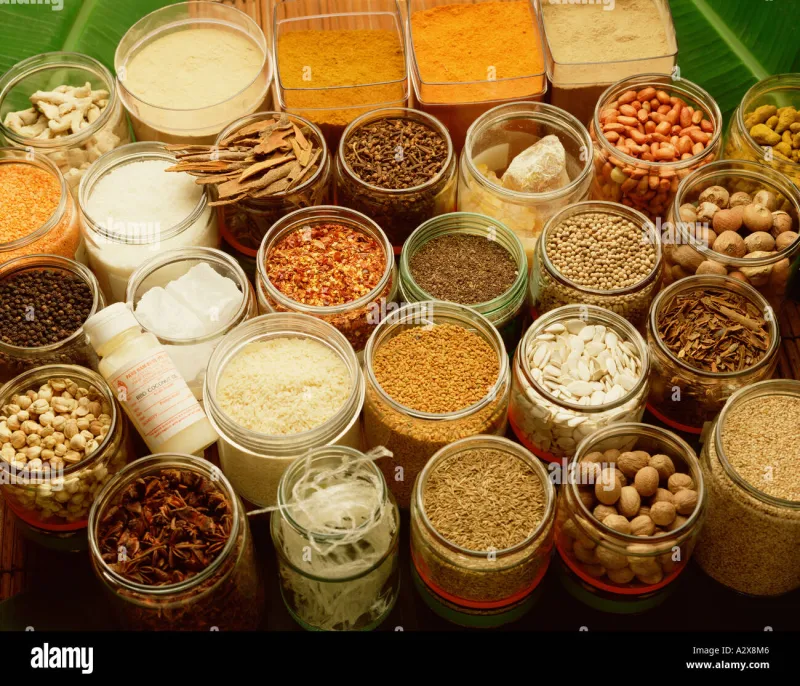
Photo: Asian pantry spices jars fermented pastes dried ingredients traditional kitchen, via c8.alamy.com
There's a jar of bagoong on the third shelf of Marisol Reyes's pantry in Glendale, California. It sits behind the soy sauce and next to a bag of dried shrimp, and it has been there, in one form or another, for the entire twenty-two years she's lived in the United States. She doesn't use it every day. But she never lets it run out.
"When I open that jar," she says, "I'm not in Glendale anymore. I'm in my grandmother's kitchen in Batangas. It's that fast."
That's the thing about an Asian pantry. It doesn't just stock ingredients—it holds time.
More Than a Shopping List
For Filipino, Vietnamese, Korean, Chinese, and South Asian home cooks across the US, the pantry is one of the most emotionally loaded spaces in the house. The items that fill it—fermented pastes, dried mushrooms, whole spices, pungent sauces—are often the last living thread connecting a diaspora cook to a kitchen they no longer have access to. They're chosen carefully, sourced deliberately, and sometimes carried in suitcases across international flights because the version at the local H Mart just doesn't smell right.
Food scientists will tell you that smell is the sense most directly wired to memory. But for immigrant cooks, that's not a scientific footnote—it's daily life. The moment you crack open a container of fermented black beans, or toast a handful of whole coriander seeds, or boil pandan leaves until the kitchen fills with that grassy, almost coconut-adjacent sweetness, something shifts. The present loosens its grip.
The Ingredients That Hit Different
Ask any Filipino cook and bagoong—fermented shrimp paste—comes up almost immediately. It's pungent, salty, funky in the best possible way, and deeply divisive among people who didn't grow up with it. But for those who did, it's irreplaceable. It's the thing you spoon over green mangoes. It's the base note in kare-kare. It's the smell that meant someone was cooking something serious.
For Vietnamese-American home cooks, fish sauce—nước mắm—occupies a similar emotional territory. Not just any fish sauce, mind you. The brand matters. The region it came from matters. Cooks who grew up in Vietnam often describe American supermarket fish sauce as "thin" or "missing something," and they're not wrong. The real stuff, properly fermented and aged, has a complexity that goes well beyond salty and pungent. It has depth. It has history.
Korean pantries, meanwhile, often center on gochujang and doenjang—fermented chili paste and soybean paste, respectively. Both are made through slow, traditional fermentation processes, and both are the kind of ingredient that a Korean grandmother might have made herself, in large earthenware crocks left outside to ferment through the seasons. For Korean-Americans, buying a tub of doenjang at a Korean grocery isn't just a transaction. It's a small act of preservation.
And then there's the whole universe of dried and aromatic ingredients: dried shrimp, star anise, lemongrass, dried wood ear mushrooms, kaffir lime leaves, tamarind blocks, whole dried chilies. These are the ingredients that don't just flavor a dish—they define it. They're the reason a bowl of sinigang tastes like sinigang and not just sour soup. They're the reason a pot of pho smells like pho the moment the spices hit the hot oil.
Finding the Real Thing in the US
Here's the honest truth: not all pantry staples are created equal, and substitution has limits. But the good news is that sourcing authentic Asian pantry ingredients in the US has never been easier, even if it requires a little more effort than a trip to the nearest grocery chain.
Asian supermarkets—H Mart, 99 Ranch, Seafood City, Mitsuwa, and smaller independent stores in major metro areas—are the obvious first stop. They carry regional brands, specialty items, and the kinds of ingredient variations that matter to cooks who know the difference. For people in areas without a large Asian grocery nearby, online retailers like Weee!, Umami Insider, and even Amazon carry a surprisingly wide range of authentic products.
A few things worth knowing when you're sourcing:
- Bagoong and shrimp paste: Look for Filipino or Thai brands in sealed jars. Barrio Fiesta and Kamayan are reliable Filipino brands; Maeploy and Pantainorasingh are solid Thai options. Refrigerate after opening.
- Fish sauce: Tiparos, Megachef, and Red Boat are widely available and genuinely good. Red Boat's 40°N single-origin fish sauce is a cut above for those who want to splurge.
- Gochujang and doenjang: Haechandle and CJ are dependable Korean brands available at most H Mart locations and online.
- Dried aromatics: Whole dried spices—star anise, cardamom, cloves—are almost always better purchased at Asian or South Asian grocery stores, where turnover is higher and the product is fresher than what sits on a mainstream supermarket shelf for months.
- Tamarind: Look for pure tamarind blocks or concentrate, not tamarind-flavored products. The block form requires soaking and straining, but the flavor payoff is worth it.
The Generational Thing
What's interesting is how these pantry staples function differently across generations. First-generation immigrants often treat them as non-negotiables—the things you simply must have to cook properly. Their kids, raised in the US, sometimes have a more complicated relationship with them. The smells can feel too strong, too unfamiliar, too "ethnic" in environments where fitting in felt important.
But something tends to shift in adulthood. For many second-generation Asian-Americans, the pantry becomes a way of reclaiming something that was quietly set aside. Learning to cook with bagoong, or finally understanding why your mom always added that specific brand of soy sauce, becomes an act of identity. It becomes a way of saying: this is mine, this is where I come from, and I'm not going to let it disappear.
Marisol's daughter, who is twenty-four and was born in California, recently asked her mother to teach her how to make kare-kare from scratch. The first thing they did was open that jar of bagoong together.
"She made a face," Marisol laughs. "But then she tasted it. And then she understood."
The Pantry as an Act of Love
At Pakoman Mama, we talk a lot about how food carries love—how a meal cooked from memory is never just a meal. The pantry is where that love begins. Before the stove is even turned on, before the onions hit the oil, the act of reaching for the right ingredient—the one your lola used, the one that smells like home—is already an act of care.
Keep your pantry stocked. Teach someone what's in it. Let the jars and packets and dried bundles do what they've always done: hold the past in place until you're ready to bring it forward.