Every Dish Has Something to Say: Understanding the Unspoken Love in a Filipino Kitchen

Photo: Senate of the Philippines, Public domain, via Wikimedia Commons
There's a running joke in a lot of Filipino-American households: you'll never hear "I love you" from your Nanay, but you will find a Tupperware container of sinigang waiting on your doorstep before you even knew you were sad. That's not a gap in affection. That's a dialect.
Filipino mothers — and grandmothers, titas, and the neighbor who insists on feeding you anyway — communicate through cooking in ways that go so far beyond recipes. For those of us who grew up straddling two cultures, or for partners who married into Filipino families and suddenly found themselves at a table full of food they couldn't quite decode, understanding the why behind each dish can feel like unlocking a whole new language.
At Pakoman Mama, we're always chasing that feeling of home cooking made with intention. And nothing captures that more honestly than the quiet, loaded act of a Filipino mother deciding what to make for dinner.
The Mood Menu: When She Adjusts the Recipe for You
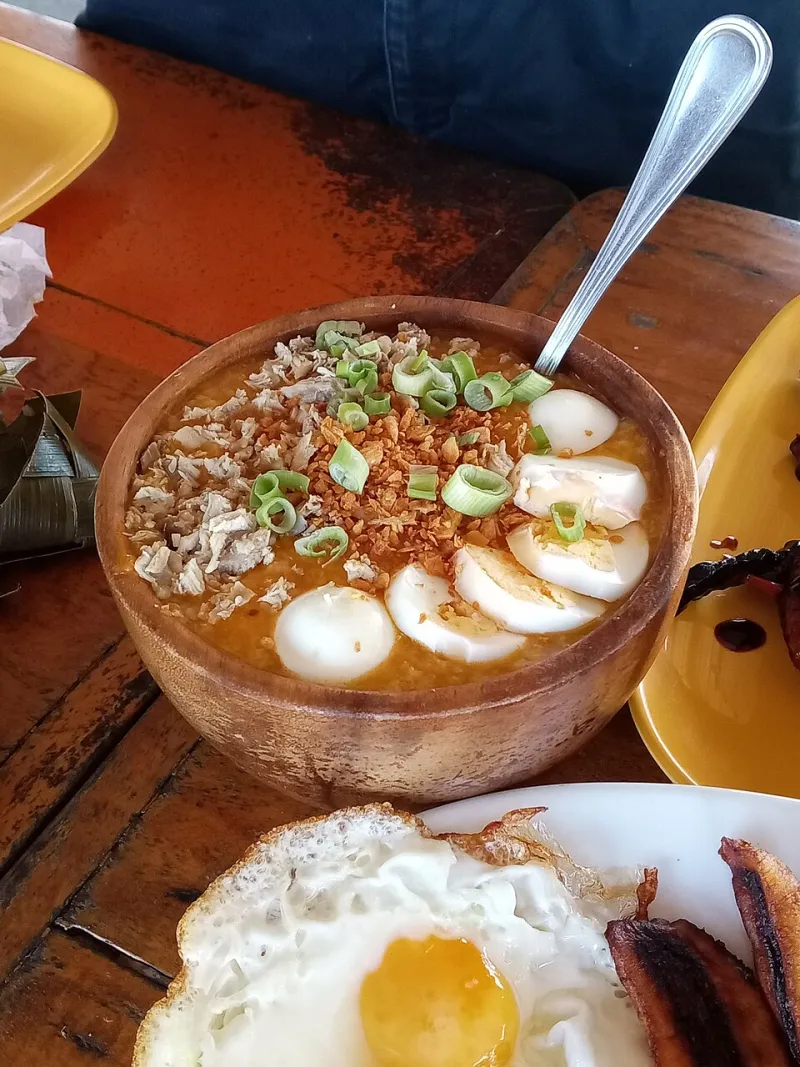
Ask any Filipino-American what their mom made when they were sick, and you'll get some version of the same answer: lugaw or arroz caldo, that silky rice porridge simmered with ginger and topped with whatever she had on hand — fried garlic, a soft-boiled egg, a squeeze of calamansi. It's not fancy. But it's never random.
Filipino mothers are remarkably intuitive about reading their people before they cook. Stressed from work? The chicken adobo might get a little more vinegar than usual — sharper, more grounding. Coming home from a breakup? Expect something sweet and slow-cooked, like a pork humba braised with banana blossoms until it practically dissolves. Celebrating a win? The table gets crowded. Every tita in a ten-mile radius gets called.
This isn't superstition or coincidence. It's attunement — the kind that develops over years of watching the people you love and figuring out what they need before they say a word. For many Filipino moms, especially those who immigrated to the US and navigated language barriers or emotional distance, the kitchen became the most fluent room in the house.
What the Occasion Dish Is Really Saying
Certain dishes carry weight that goes way beyond the ingredients. If you grew up Filipino, you already know this in your bones. But if you're new to the culture, here's a small translation guide:
Lechon at a birthday or graduation isn't just a whole roasted pig — it's a declaration. It says: This moment matters. You matter. We went all out for you. Lechon takes days of preparation. You don't serve it casually.
Pancit at any celebration is practically a cultural law, and the meaning is embedded in the noodles themselves — long strands symbolizing long life. When your lola insists on pancit at every birthday, she's not being superstitious. She's wishing you well in the most tactile way she knows how.
Champorado on a rainy school morning is pure tenderness. It's chocolate rice porridge, warm and sweet, and it says: I know the day feels heavy. Here's something soft to start it with.
Paksiw or leftover adobo reheated and sent home with you is arguably the deepest expression of all. It says: I thought about you after you left. I wanted you to have something good tomorrow.
For American-born Filipinos who maybe didn't grow up hearing "I'm proud of you" out loud, recognizing these gestures as the equivalent — or sometimes even more meaningful — can be genuinely healing.
The Silence That Feeds
One thing that can catch non-Filipino partners or friends off guard is how much emotional labor happens in the Filipino kitchen without a single word being spoken. There's no announcement. No card attached. Your boyfriend's mom just quietly made your favorite dish the first time you came over for dinner, and you didn't realize until years later that she'd asked him what you liked two weeks in advance.
That's the thing about this love language — it's not performative. It doesn't ask to be acknowledged. It just shows up on the table and waits.
For multicultural couples navigating different emotional styles, this can sometimes create friction. A partner who grew up in a household where feelings were verbalized might not immediately register a pot of kare-kare as an olive branch. And a Filipino mom who cooked all day might feel unseen when that effort goes unspoken. Learning to name these gestures — to say, "Thank you for making this, I know it took time" — can bridge a real gap.
Passing It Down, Even When the Recipe Gets Lost
Here's where it gets complicated for a lot of second-generation Filipino-Americans: the recipes themselves don't always get passed down cleanly. Lola cooked by feel. Nanay watched but never measured. And now you're standing in your apartment in Chicago or Houston or Sacramento trying to recreate a dish you ate a hundred times as a kid, and it's close but not quite right.
What's actually being passed down isn't just a set of instructions — it's a practice of care. The act of cooking for someone, of adjusting the seasoning because you know they don't like it too salty, of making extra so they have something to take home — that's the inheritance. The specific recipe is almost secondary.
If you're in that process of reconnecting with your heritage through food, know that you don't have to get it perfect to get it right. Call your mom. Ask her to walk you through it over the phone while you cook. Let her correct you. That back-and-forth is the love language in real time.
Learning to Speak It Back
One of the most meaningful things you can do — whether you're Filipino yourself or someone who loves a Filipino family — is learn to speak this language back. That doesn't mean you have to master kare-kare on your first try. It means showing up with effort.
Bring a dish to the family gathering instead of just wine. Ask your partner's mom to teach you one recipe — not because you have to, but because you want to understand her. Cook something for someone who's going through a hard time and don't make a big deal out of it. Just leave it on their doorstep.
You'll be surprised how much gets communicated without a single word.
At Pakoman Mama, we believe food is one of the most honest forms of storytelling there is. And in Filipino kitchens across the US — from the suburbs of New Jersey to the apartment buildings of LA — that story is being told every single day, one pot at a time.