Garlic Rice at Midnight: Why Silog Might Be the Best Dinner You Haven't Made Yet
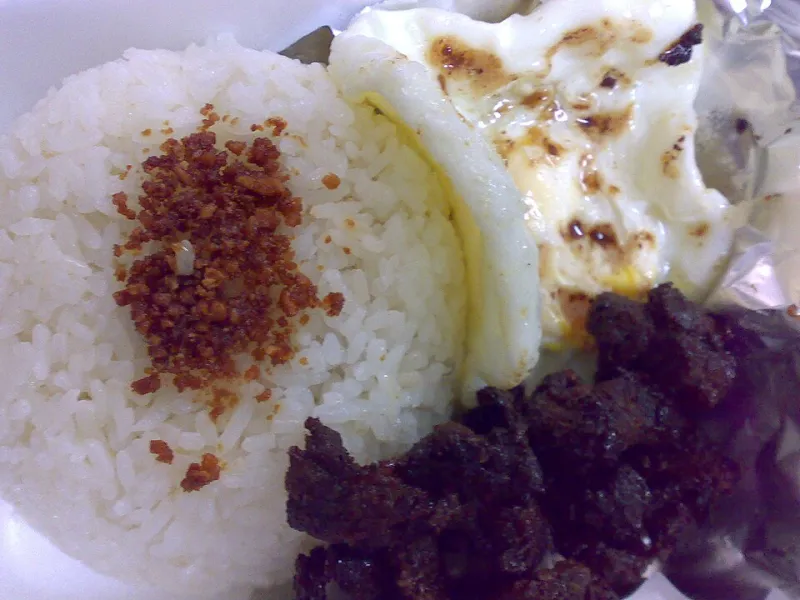
Photo: Kguirnela at English Wikipedia, CC BY 2.5, via Wikimedia Commons
There's a moment every Filipino-American knows well: it's 8 p.m., you're tired, and the idea of cooking anything complicated feels like a personal attack. Somewhere in the back of your mind, a voice says the same thing it always says — make silog.
If you didn't grow up with it, silog is easy to explain and even easier to love. It's a plate built on three things: sinangag (garlic fried rice), itlog (a fried egg, usually with a runny yolk), and some kind of marinated, pan-fried meat. The name is literally a mashup — si from the meat, log from itlog. Tapsilog uses beef tapa. Longsilog uses longganisa sausage. Tocilog uses tocino, sweet cured pork. Swap the protein and you've got a whole new meal with zero new techniques.
And here's the part that matters for American kitchens: silog might be the most underrated breakfast-for-dinner in existence. It's faster than a stir-fry, cheaper than takeout, and it hits that salty-sweet-garlicky-eggy spot that bacon and eggs only dreams about.
Start With the Rice (Yesterday's Rice, Ideally)
The foundation of any good silog is sinangag, and the secret is day-old refrigerated rice. Freshly cooked rice is too moist and turns gummy in the pan. Leftover rice — the kind that's been sitting in the fridge overnight, grains firming up — fries up into separate, toasty little pearls.
To make it: heat a generous glug of neutral oil in a wide skillet, add a shocking amount of minced fresh garlic (we're talking 5 to 6 cloves per cup of rice — don't be shy), and cook it gently until it's fragrant and just barely golden. Add the cold rice, break it up, and toss it over medium-high heat until every grain gets coated and some edges crisp up. Season with salt. That's it. No soy sauce needed, no fancy anything. The garlic does the heavy lifting.
A tip from my Lola's playbook: press the rice into an even layer and let it sit undisturbed for a minute before tossing. Those little crunchy bits are the whole point.
The Three Proteins, Decoded
Tocino (Sweet Cured Pork)
Tocino is pork — shoulder or belly — cured in a sweet marinade of sugar, soy sauce, garlic, and a touch of vinegar. It caramelizes into sticky, mahogany-edged slices that taste like bacon's more interesting cousin. To cook it, simmer the slices in a little water until it evaporates, then let the fat render and the sugar char slightly. That two-step method is the trick.
Grocery store version: Thin-sliced pork chops or pork belly from Kroger or Safeway work beautifully. Marinate overnight in 2 tablespoons each of sugar and soy sauce, a minced garlic clove, and a splash of white vinegar.
Longganisa (Garlicky Sweet or Sour Sausage)
Longganisa is the Filipino sausage, and it comes in two camps: sweet (hamonado) and garlicky-vinegary (de recado). Either way, you cook it with a splash of water, let the casings brown, and serve it with the rendered fat spooned over the rice. Trust me on this one — you want that fat on the rice.
Grocery store version: If you can't find longganisa, sweet Italian sausage removed from its casing, sautéed loose with extra garlic and a teaspoon of sugar, gets you remarkably close. It's not identical, but nobody at your table will file a complaint.
Tapa (Savory-Sweet Beef)
Tapsilog is the king of the silog family and the default order at any Filipino breakfast joint. Tapa is beef — usually sirloin — cured in soy sauce, sugar, garlic, and calamansi or lemon, then pan-fried until the edges crisp.
Grocery store version: Any thin-cut beef works. Buy sirloin or even flank steak, freeze it for 20 minutes, and slice it paper-thin against the grain. Marinate for at least an hour in soy sauce, brown sugar, minced garlic, and fresh lemon juice, then fry hot and fast.
Assemble Like You Mean It
The beauty of silog is the assembly. Rice on one side of the plate, meat on the other, and a fried egg right in the middle with a yolk that runs into everything. Traditionalists add a small pile of atchara — pickled papaya — or a quick tomato-and-onion salad for acidity. A dish of vinegar with chili and garlic for dipping the meat is never wrong.
That vinegar bite isn't optional in spirit. The whole plate is rich and savory-sweet, and the sharp, sour pickle cuts through it. If you don't have atchara, quick-pickle some thinly sliced cucumber or red onion in vinegar, sugar, and salt while the rice fries. Five minutes, done.
Why It Works for Dinner
Silog checks every weeknight box. It uses leftovers (the rice, at minimum). It takes under 30 minutes once your protein is marinated. It's endlessly customizable — chicken, tofu, even leftover pork chops can step in. And there's something deeply satisfying about eating garlic rice at night, when nobody's rushing you out the door and the yolk can run in peace.
In the Philippines, this is fuel for a full day of work or school. In your kitchen, it can be whatever you need it to be: a 7 a.m. power-up or a 9 p.m. comfort plate. The rice doesn't care what time it is.
So next time you're staring into the fridge at dinnertime, remember: there's leftover rice in there, eggs in the tray, and a piece of meat that just needs a marinade and a hot pan. The Filipinos figured this one out generations ago. All you have to do is fry the garlic.