Peace at the Dinner Table: How to Cook Traditional Asian Food for a Family Full of Opinions
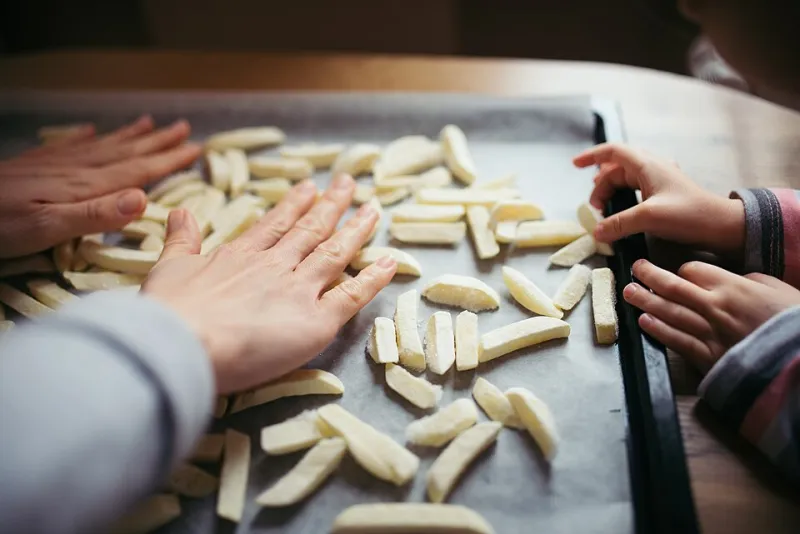
Photo: Shixart1985, CC BY 2.0, via Wikimedia Commons
Let's set the scene. You've decided tonight is the night. You're making your mom's adobo—the real version, the one with liver, a generous pour of vinegar, and fish sauce in the braising liquid. You've been thinking about it all week.
Then your eight-year-old announces she doesn't eat "brown food." Your husband reminds you he's been vegetarian since January. And your mother-in-law, who is visiting from Ohio, asks if you have anything "a little more plain."
Welcome to dinner in a multicultural American household.
The Real Problem (And It's Not the Food)
Here's the thing that doesn't get said enough: the challenge of cooking traditional Asian food for a mixed or picky household isn't really a flavor problem. It's a negotiation problem. It's about figuring out how much you're willing to bend before the dish stops being itself—and where you can flex without losing the soul of what you're making.
The worst solution, and the most common one, is to just stop cooking the traditional stuff altogether. You swap the sinigang for a chicken soup that offends no one and satisfies no one either. The food gets safer, blander, and further from the recipes that meant something. And somewhere in the back of your mind, you feel a small, quiet loss.
The better solution takes a little more thought. But it's absolutely doable.
Start With the Structure, Not the Recipe
Most traditional Asian dishes have a core structure: a protein, an aromatic base, a flavor agent (fermented, acidic, or spiced), and often a texture element. Understanding that structure is what lets you adapt without dismantling.
Take adobo. Its soul is the combination of acid (vinegar), salt (soy sauce and/or fish sauce), garlic, bay leaf, and slow braising. That's the essence. The protein is actually the most flexible part. Chicken, pork, tofu, mushrooms, even jackfruit—all of them can absorb that flavor profile and still deliver an adobo that tastes like adobo.
So when your household has a vegetarian in it, the move isn't to make a completely different dinner. It's to braise a portion of firm tofu or king oyster mushrooms in the same sauce. Same pot, same spices, pulled out before the chicken goes in. The vegetarian gets a real meal. The non-vegetarians get their chicken. Nobody feels like an afterthought.
This is the "same bath, different swimmer" approach, and it works across dozens of dishes.
The Picky Kid Problem
Children are a different challenge because their resistance is often textural or visual before it's even about flavor. "I don't like the slimy things" (wood ear mushrooms). "It smells weird" (fish sauce in the cooking liquid). "Why is it that color" (turmeric-yellow rice, annatto-orange stews).
A few strategies that actual home cooks swear by:
Build flavor in stages and keep components separate. For dishes like pancit or fried rice, cook the base components together for the adults, but set aside a plain portion of noodles or rice before adding the aromatics and sauces. Let the kid add their own toppings. You'd be surprised how much more a child will eat when they feel like they have some control.
Don't hide things, explain them. Kids are often more resistant to mystery than to flavor. If your child knows that the orange color in kare-kare comes from annatto seeds—and you've let them see you toast them—it becomes interesting instead of suspicious. Demystify the ingredients. Make them part of the process.
Introduce the building blocks first. Instead of serving a full bowl of arroz caldo all at once, let a picky eater try plain congee (just the rice porridge base) first. Then add a soft-boiled egg. Then a little ginger. Build the dish up over multiple meals. By the time you add the full garnish, they've already accepted each component.
Handling Dietary Restrictions Without Losing the Dish
Gluten-free, dairy-free, nut allergies, low-sodium needs—these are real constraints that require real adjustments. But Asian cuisine, it turns out, is actually pretty well-suited to a lot of them.
Philippine, Vietnamese, and Thai cooking is largely dairy-free by tradition. The richness in these dishes comes from coconut milk, not cream. Gluten is a bigger variable—soy sauce contains wheat, which rules it out for people with celiac disease or serious gluten sensitivity. The fix is straightforward: tamari (a Japanese soy sauce made without wheat) is a one-to-one substitute in almost every application. Coconut aminos are another option, though they're slightly sweeter and less salty, so adjust accordingly.
For low-sodium households, fish sauce and soy sauce are the main culprits. Rather than eliminating them entirely—which strips a dish of its backbone—the move is to reduce the quantity and compensate with acid (more lime, more tamarind, more vinegar) and aromatics (more ginger, garlic, lemongrass). The dish will taste different, but it will still taste like itself.
What You Don't Have to Negotiate
Not everything is up for modification, and that's worth saying plainly. Some dishes have elements that are non-negotiable if the dish is going to remain what it is. Sinigang without tamarind isn't sinigang. Kare-kare without peanut sauce isn't kare-kare. Bun bo Hue without lemongrass and shrimp paste is just spicy beef soup.
Knowing which elements are load-bearing—and communicating that to your family—is part of the process. It's okay to say: "I can leave the liver out of the adobo, but the fish sauce stays. That's not negotiable. This is what the dish is."
Setting those parameters isn't being rigid. It's being honest about what you're cooking and why it matters. And most family members, even picky ones, can respect a boundary when it's explained with some warmth.
The Longer Game
Here's what home cooks who've been doing this for years will tell you: the goal isn't to win every single meal. It's to keep the food present. Keep showing up with the dishes. Keep explaining where they come from. Let kids be part of the cooking, even if they won't eat the result yet. Let resistant family members try one bite without pressure.
Palates change. Curiosity grows. The child who wouldn't touch anything with visible garlic at age seven is often the one asking for the recipe at age seventeen.
At Pakoman Mama, we believe traditional food is worth fighting for—but the fight doesn't have to look like a battle. It can look like a patient, ongoing invitation. Keep the pantry stocked. Keep the recipes alive. Adapt where you can, hold firm where it matters, and trust that the food will eventually do what it's always done: bring people together.
Even the picky ones.