Everything Comes in Small Packages: The Filipino Corner Store Lesson American Kitchens Need
One Teaspoon of Everything
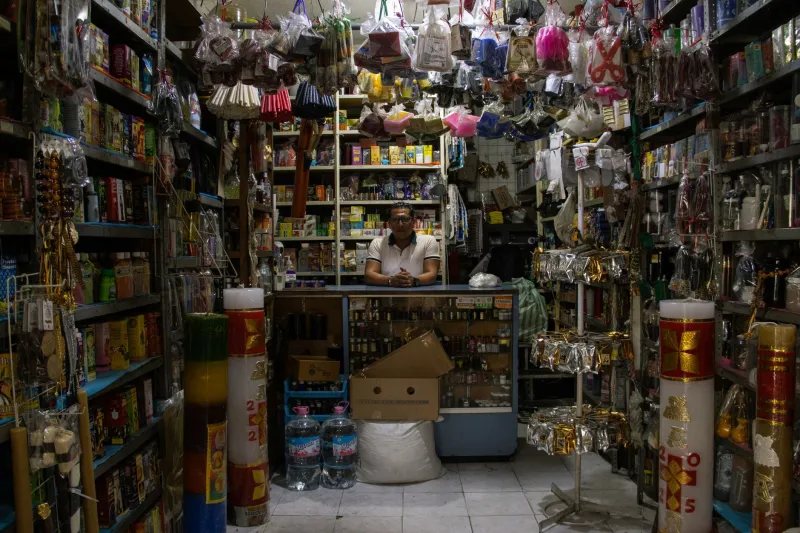
If you grew up around a sari-sari store in the Philippines, you know the ritual. A kid walks up to the window — because yes, most sari-sari stores are literally windows in the front of someone's house — and asks for one sachet of shampoo, three pieces of candy, and a small bag of soy sauce poured from a big gallon into a little plastic pouch tied with a knot.
Nothing comes in bulk. Nothing comes before you need it. And almost nothing goes to waste.
Now walk into any American supermarket and the contrast is almost funny. Thirty-ounce jars of mayo. Family-size everything. Club packs that require a garage just for storage. We buy big because big feels like a deal — and then we toss out the wilted celery, the moldy half-onion, the sauce we opened once for a single recipe.
There's a word for the sari-sari way of doing things, and it's not just about shopping. It's about trusting that the store will still be there tomorrow. Sari-sari roughly means "assorted" or "variety," but the real philosophy is simpler than that: buy what you need today, and come back when you need more.
Why the Sachet Economy Exists
It's easy to look at single-use sachets and think they're just a sign of smaller budgets — and in part, they are. Sari-sari stores exist because millions of families in the Philippines manage money by the day, not the month. A ₱10 packet of coffee is manageable in a way that a ₱300 canister isn't.
But there's a quieter wisdom in the system too. When you buy small, you use what you have while it's fresh. You don't own a pantry full of ingredients you've forgotten about. Your food doesn't expire in the back of a cabinet because you bought it "on sale" two years ago.
American households throw away roughly a third of the food they buy. That's not just money in the trash — it's a whole aisle of good intentions rotting in the crisper drawer.
The Sari-Sari Spirit Lives On Here
You don't have to look hard to find the corner store's descendants in Filipino-American and broader Asian-American communities.
In cities with big Filipino populations — Houston, Las Vegas, Daly City, Virginia Beach — the neighborhood Filipino market often plays exactly that role. It's where titas catch up on gossip in the produce aisle, where you learn which brand of banana ketchup someone's grandmother swears by, and where the owner knows your order before you say it.
Boba shops and Asian bakeries have picked up the community role too. They're not just selling drinks and pandesal — they're the third place where teenagers do homework, where aunties linger over milk tea, where the neighborhood actually talks to itself.
And lately, the sari-sari model has gone digital. Small online shops run out of someone's garage will ship you a single packet of sinigang mix or one bar of Polvoron, bundled with the kind of handwritten thank-you note no big-box retailer has ever managed. Some Filipino-American entrepreneurs have even built delivery services explicitly modeled on the sari-sari store — tiny quantities, low barrier to entry, personal relationships built in.
Borrowing the Mindset in Your Own Kitchen
You can't shrink a Costco run down to a window transaction — but you can steal the philosophy. Here's how the sari-sari state of mind translates to an American kitchen.
Shop the bulk bins and spice aisles first
Most natural food stores and even some mainstream chains let you buy spices, grains, and nuts by weight. Need two tablespoons of jasmine rice for a test recipe? Buy two tablespoons' worth. It costs pennies and you'll never toss a stale half-bag again.
Freeze in recipe-sized portions
The sari-sari store sells cooking oil in tiny plastic packets. Your freezer can do the same job. Portion out tomato paste in tablespoon scoops, freeze fresh ginger in thumb-sized chunks, divide that giant pack of chicken thighs into meal-sized bags before it all becomes one frozen brick.
Buy the odd sizes
Those single-serve packs of rice noodles or one-portion ramen bowls that seem wasteful at first glance? For a household of one or two, they're actually the honest portion size. Buying for the household you have — not the one food marketers imagine — is half the battle.
Plan around the store, not around the stockpile
The sari-sari customer doesn't meal-plan around a deep freezer. They decide what's for dinner and get exactly what it needs. If you live near a decent grocery store, a midweek ten-minute top-up trip often wastes less than a heroic weekly haul you won't finish.
Let the corner store be a habit, not just a store
The deepest lesson of the sari-sari store isn't portion size at all. It's that food shopping used to be a relationship — a daily hello, a running tab, an owner who'd spot you a pack of crackers until Friday. Whatever your version of that is — the local Asian market, the guy at the produce stand, the group chat where neighbors split a wholesale pack of noodles — hold onto it. Big-box convenience is real, but so is what we lose when every transaction is anonymous.
Small Packages, Big Ideas
There's a certain irony in writing about a store that sells everything in miniature for a website named after a home cook's kitchen. But that's kind of the point. Lola's kitchen and the sari-sari window come from the same world: one where you make do, use it up, and share what you have.
So the next time you're staring down a two-pound tub of something you need a teaspoon of, think of the little window in the neighborhood store, the plastic pouch tied in a knot, the exact amount and not a bit more. Buy small. Waste nothing. Come back tomorrow.
The sari-sari store has been running that model for generations. It might be the most sustainable grocery system America never had.