Long Noodles, Long Life: The Birthday Pancit Tradition (and How to Throw a Pancit Bar Party)
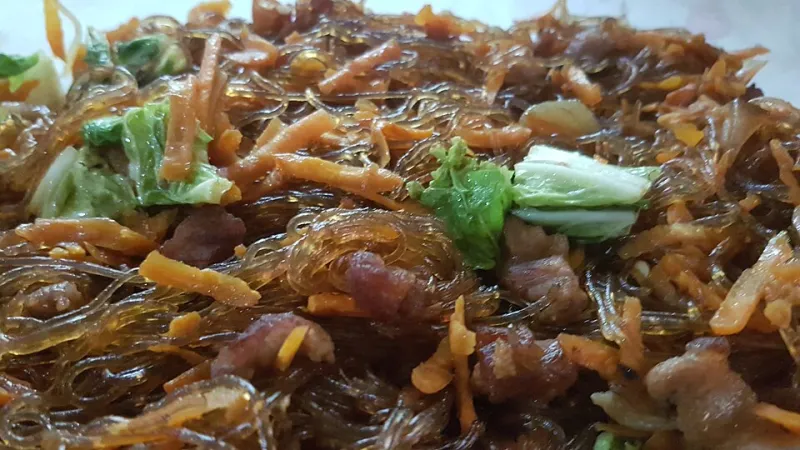
Photo: Obsidian Soul, CC0, via Wikimedia Commons
Ask any Filipino kid what they're eating on their birthday and you won't hear "cake" first. You'll hear pancit.
It doesn't matter if the party is at a rented hall in Daly City or a backyard in Houston — there will be a platter of noodles, usually pancit bihon or canton, glistening with soy and citrus, studded with shrimp and sliced hot dogs (yes, hot dogs — more on that later). And there will be a rule, repeated by every auntie within earshot: eat every strand. Don't cut the noodles. Long noodles, long life.
Where the Superstition Comes From
The pancit-on-your-birthday rule is Filipino by way of China. Pancit itself comes from the Hokkien pian e sit, meaning "something conveniently cooked fast," and Chinese merchants brought noodle culture to the Philippines centuries ago. Along with the noodles came the symbolism: in Chinese tradition, long unbroken noodles represent an unbroken life.
Filipino culture absorbed that idea and made it its own. Birthdays, graduations, new jobs, even surviving a rough week — if there's a milestone, there's pancit. Cutting the noodles with scissors or a knife? Absolutely not. Slurping them the long way? That's not bad manners. That's the whole point.
For many families, the superstition is less about literal belief and more about ritual. You may not truly think a snapped noodle shortens a lifespan, but you also don't risk it. It's the same reason American kids blow out every candle: some traditions you honor first and question never.
Second Generation, Same Rule
Talk to Filipino-American families and you'll hear the same refrain: this is the tradition that stuck.
Maria, a second-generation cook in Chicago whose parents emigrated in the '80s, puts it plainly: "My kids don't speak much Tagalog. They've never been to the Philippines. But they know you don't cut the pancit. My daughter made her college roommate sign a card promising not to cut the noodles on her birthday. That's the tradition carrying itself forward."
First-generation cooks often say the same thing from the other direction — pancit is the dish they cook when they're too busy for anything elaborate but too superstitious to skip the ritual. A box of bihon noodles, whatever's in the crisper drawer, a splash of soy and calamansi or lemon: twenty minutes, and the birthday is protected.
That's the quiet genius of the tradition. It's not expensive, it's not complicated, and it scales from a Tuesday night to a block party. In a country where birthday rituals often revolve around cake and presents, pancit offers something different — a meal that says I want you here for a long time.
Hosting a Birthday Pancit Bar
Here's where we suggest leveling up: instead of one giant platter, set up a pancit bar and let guests build their own bowls. It works for kids' parties, adult celebrations, and everything in between.
The foundation. Cook two or three noodle bases in big pots — pancit bihon (thin rice noodles), pancit canton (wheat noodles), and if you're ambitious, a soy-sauce-heavy pancit habin or a rich, peanutty pancit palabok. Keep them loose and slightly under-sauced so toppings shine.
The toppings. Set out bowls of:
- Sliced hard-boiled eggs and chopped green onions
- Crispy fried garlic and crushed chicharon
- Shredded chicken and sautéed shrimp
- Chorizo de Cebu or — the nostalgic classic — sliced red hot dogs
- Calamansi wedges (or lime if that's what your grocery store has)
- A bottle of soy sauce, a bottle of fish sauce, and chile crisp for the rebels
The rule of the bar. Put a small sign by the bowls: No cutting the noodles — it's for your own good. Watch your guests laugh, comply, and ask why. That's your opening to tell the story. Traditions survive by being explained at tables.
Pro move: assign one noodle-honoring duty to the birthday person. They take the first bowl, hold it up, and declare the year ahead. It takes thirty seconds and turns dinner into a moment.
Why It's Worth Keeping
There's a version of assimilation where traditions get dropped one by one because they feel small. But small rituals are the load-bearing walls of a culture. Pancit on a birthday costs ten dollars and twenty minutes. What it buys is a thread connecting a kid in New Jersey to a grandmother in Pampanga she may have never met.
So this year, skip the reservation. Boil the noodles, leave them long, and pass the calamansi. Your guests get dinner. The birthday person gets, according to several generations of very confident aunties, a few extra years.
Seems like a good trade.