The Rice Isn't Just Rice: What Our Family's Quietest Argument Is Really About
Ask anyone who grew up in a Filipino, Chinese, Korean, Vietnamese, or Thai household in America: there is always one person who believes — deeply, unshakably — that nobody else in the family knows how to cook the rice.
Not the adobo. Not the spring rolls. The rice.
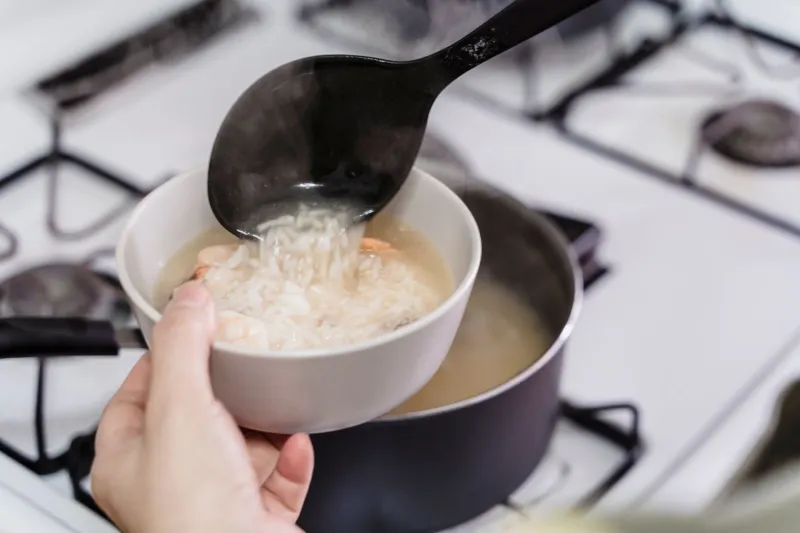
In my family, it was my aunt. She'd stand at the sink with her fingertips in the pot, swishing the grains around like she was reading tea leaves. "You're washing away the flavor," she'd mutter at anyone who dared rinse too aggressively. "And you're not washing enough," she'd warn the opposite offender the very next day. The water had to run almost clear. Her knuckle had to touch the surface of the water, and the rice line had to hit exactly the first joint. No measuring cups. Measuring cups were, in her words, "for people who don't pay attention."
She was right, by the way. That's the annoying part.
The Knuckle Knows: Why This Task Became Sacred
Rice shows up at every single meal, which means the person who cooks it never gets a day off — and never stops being judged. In a lot of immigrant households, rice duty was one of the first responsibilities handed to kids. It was training wheels for running a kitchen. You learned the sound of the pot just before it boils over. You learned that your mom's "a little water" meant something different than your dad's "a little water."
So when the kids grow up and move out, and the first thing they buy is a $30 rice cooker from Target — or a $300 Zojirushi they spent three weeks researching on Reddit — it's not a betrayal exactly. But it can feel like one.
The older generation hears: You needed a machine to do what I did with a pot and my knuckle? The younger generation hears: I have a job, a commute, and a group chat I can't keep up with. The machine is how I keep this part of home alive.
Both are saying the same thing: this matters to me. They just can't hear it over the sound of the rice cooker's little song.
The Fight Underneath the Fight
Here's what I've come to believe after too many Thanksgivings watching relatives debate water ratios: the rice argument was never about rice.
It's about who gets to be the keeper of the standard. In families that crossed an ocean, food became the last territory where the old country couldn't be argued with. Your kids might prefer chicken nuggets, might speak English before Tagalog or Cantonese, might not understand why the rice has to be that texture — but the rice itself can't be Americanized. It either sticks together the way it should or it doesn't. There's a strange comfort in that. One thing that stays true.
And for the second generation? Cooking the rice "right" is a way of claiming belonging. You might fumble the language, feel too American at the family parties and too American at school, but you can nail the pot of rice. That's a quiet credential. That's a way of saying I'm still in this family, in this story.
So when the aunt sighs at your rice cooker, and you bristle a little, you're both defending something bigger than starch. You're defending your seat at the table. Literally.
Different Rices, Different Homes
There's also the small matter that "the right rice" doesn't exist. My Lola used jasmine for everything. My mother-in-law swears by a bag of long-grain from the same Asian grocery she's shopped at for thirty years. My cousin in Houston keeps a rice blend with quinoa in it and has simply stopped mentioning it at gatherings.
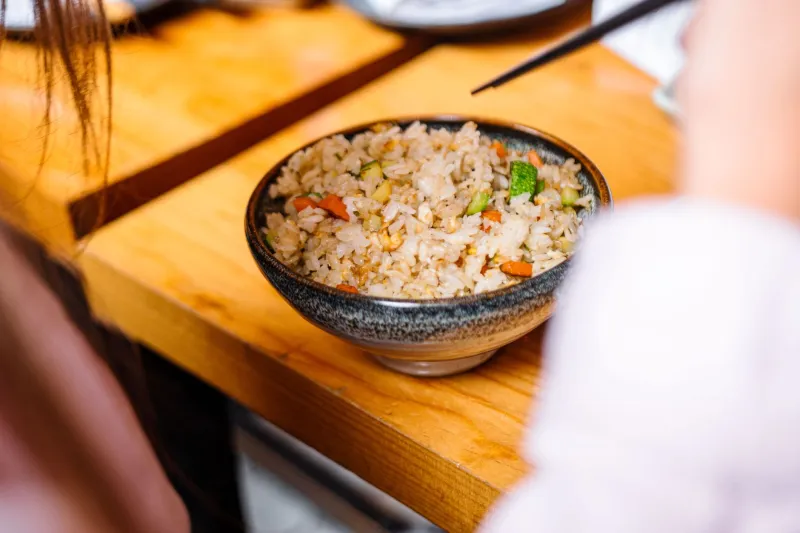
Jasmine for Filipino garlic fried rice. Short-grain for Korean and Japanese meals. Sushi rice rinsed until the water runs clear, jasmine rinsed barely at all if you ask some aunties, thoroughly if you ask others. Slightly drier for the person who soaks it with adobo sauce, stickier for the person eating with their hands the traditional way. Every version is correct somewhere in the family tree.
Which brings me to the peace treaty.
End the War: Host a Rice Bar
If your family has its own low-grade rice conflict, don't fight it — cater to it. A rice bar is the easiest potluck-style gathering you'll ever host, and it turns the argument into the menu.
Set up three rice stations:
- The Classic Pot — jasmine or long-grain cooked the old way, on the stove, knuckle method welcome. Label it "Tita Approved."
- The Machine Zone — short-grain rice from the cooker, perfectly sticky, zero effort. Label it "The Future."
- The Wild Card — brown rice, a blend, cauliflower rice if someone in the family has gone through a phase. Nobody has to love it. It just gets a seat.
Then build the toppings bar:
- A slow cooker of adobo or chicken curry for spooning over everything
- Fried garlic, chopped scallions, crispy shallots
- Fried eggs, one per person, because a fried egg on hot rice is the great equalizer
- Soy sauce, patis (fish sauce), vinegar with chili, leftover tocino if you have it
- Something pickled — atchara, kimchi, quick cucumber — to cut through the richness
Everyone builds their own bowl with their rice and their toppings. Nobody has to concede that anyone else's method is superior. The pot, the machine, and the quinoa blend all coexist under one roof, which is more than most families can say about anything else.
And here's the part nobody expects: when everyone's rice is on the table, the argument dissolves. Because the fight was never really about who's right. It was about making sure the thing that matters — the daily ritual, the shared bowl, the taste of home — doesn't get lost.
Serve it family-style. Eat together. Let the knuckle and the Zojirushi call a truce.
The rice, as always, will hold.