More Than a Bowl of Rice: How Arroz Caldo Carries the Weight of Home for Filipino-Americans
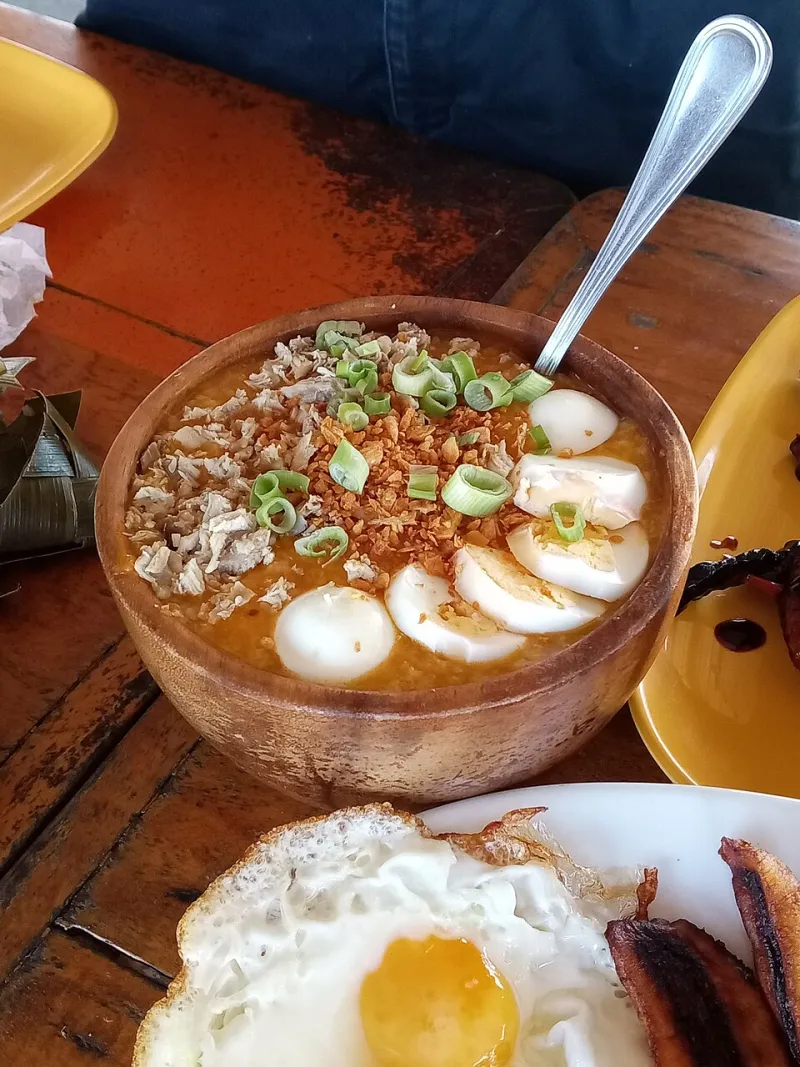
Photo: Wide Awake!, CC BY 4.0, via Wikimedia Commons
There's a moment that almost every Filipino-American knows by heart. You're sick, or stressed, or just having one of those days where everything feels slightly off. And then someone — a lola, a tita, a mom in a well-worn daster — slides a bowl in front of you. Thick, gingery, golden rice porridge, topped with a soft-boiled egg and a squeeze of calamansi. Suddenly, the world feels a little more manageable.
That bowl is arroz caldo. And it does something that no over-the-counter remedy ever quite manages to pull off.
The Dish That Shows Up When You Need It Most
Arroz caldo — literally "rice broth" in Spanish — is one of those Filipino staples that doesn't really have a single recipe. Every family makes it differently. Some load it with chicken thighs. Others keep it simple with just ginger and garlic. Some finish it with crispy fried garlic and a drizzle of fish sauce. Others wouldn't dream of serving it without toasted bread on the side.
That's kind of the point. The dish bends to whoever is making it, which means it always tastes like that person. Like home. Like belonging.
Food historian and Filipino culinary researcher Dr. Ligaya Santos (who has spent years documenting immigrant food traditions across the West Coast) puts it plainly: "Filipino comfort food isn't really about ingredients. It's about the act of being fed. There's a whole cultural vocabulary built around it — alaga, meaning to care for someone, shows up constantly in how families talk about cooking for each other. The food is the language."
Lugaw, Tinola, and the Grammar of Care
Arroz caldo isn't alone in this role. Its plainer cousin, lugaw — a simpler rice porridge often cooked with just ginger — carries similar weight, especially in households where resources were stretched thin. Tinola, the light green-papaya chicken soup fragrant with malunggay leaves, is another dish that shows up at bedsides and after long travel days. These aren't fancy foods. They're not trying to impress anyone. They exist purely to restore.
For many Filipino immigrants who arrived in the US during the waves of migration in the 1970s, 80s, and 90s, these dishes became lifelines in a very literal sense. Learning to cook arroz caldo in a new country — tracking down ginger at an Asian grocery store in a city where Filipino ingredients weren't always easy to find — was an act of cultural preservation as much as it was meal prep.
Maria Reyes, 58, who came to California from Cebu in 1989, remembers making lugaw on a hot plate in a studio apartment in Daly City. "I didn't have the right rice at first. I used whatever I could find. It didn't taste exactly like my mom's. But it still felt like her," she says. "That's the thing about these foods. They're forgiving. They meet you where you are."
Why Humble Food Hits Different
There's a psychology to all of this that food researchers have been quietly documenting for years. Comfort foods tend to be the foods we ate during moments of safety and care — early childhood, family gatherings, times when someone was looking after us. When we eat them again as adults, especially under stress, we're not just tasting flavors. We're accessing a feeling.
For diaspora communities, that effect is amplified. When you're navigating a culture that doesn't always reflect you back, food becomes one of the most reliable anchors to identity. You can lose your accent. You can stop speaking Tagalog or Bisaya at home. But the smell of garlic hitting hot oil, or ginger simmering in broth, can pull you back to yourself in seconds.
Second-generation Filipino-Americans often describe this as a kind of double comfort. The food connects them both to their parents and to a place they may have never actually lived. Twenty-six-year-old Jess Villanueva, born and raised in New Jersey, says she didn't grow up eating much Filipino food at home — her parents were busy, the ingredients weren't always around. But when her lola visited from Manila and made arroz caldo, something clicked.
"I remember thinking, this is what I've been missing," she says. "Not just the taste. The whole thing — her making it, the smell in the apartment, the way she kept checking if I wanted more. I started learning how to cook it after she left. It felt like keeping something alive."
Pakoman Mama and the Tradition of Feeding Forward
This is exactly the spirit that drives what we do here at Pakoman Mama. The idea that a home-cooked meal is never just food — it's a story, a relationship, a piece of cultural DNA passed down through generations of women (and men) who knew that feeding someone well was one of the most powerful things you could do for them.
Filipino cuisine doesn't always get the spotlight it deserves in the broader American food conversation. It doesn't have the same mainstream visibility as other Asian cuisines yet, though that's changing fast. But for the Filipino-Americans who grew up eating it, no amount of trendy restaurant buzz will ever match the version that came out of their family's kitchen.
Keeping the Bowl Full
The good news is that arroz caldo and its comfort-food cousins are having a moment — not just in Filipino restaurants popping up in LA, New York, and Chicago, but in home kitchens across the country where a new generation is learning the recipes their grandmothers never wrote down.
Social media has played a surprising role here. Filipino food creators on TikTok and Instagram have introduced dishes like arroz caldo and tinola to audiences who'd never heard of them, while also giving Filipino-Americans a space to share their own family versions. The comment sections on these videos are full of people saying things like "this is exactly how my lola made it" or "I haven't had this since I was seven."
That's the real power of comfort food. It doesn't just feed the person in front of you. It feeds forward — carrying memory and meaning through time, across oceans, into kitchens that look nothing like the ones where the recipe was first made.
So the next time you're under the weather, or homesick, or just need something that feels like a hug in a bowl — make arroz caldo. Use your family's version if you have one. Improvise if you don't. Add too much ginger. Top it with a jammy egg. Eat it slowly.
You'll understand everything you need to know about Filipino comfort food in that first spoonful.