When the Little Green Citrus Runs Out: A Calamansi Substitution Map
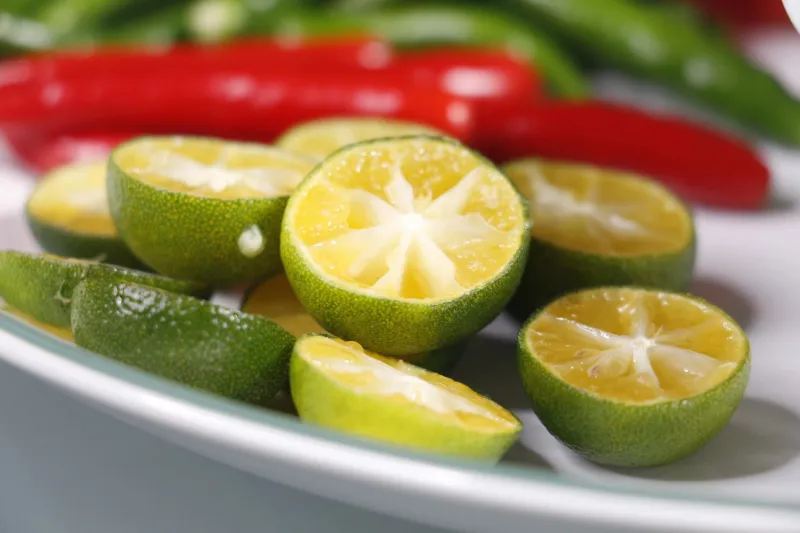
The first time someone tells you calamansi is basically a tiny lime, it sounds reasonable. Then you taste one — thin-skinned, orange-fleshed inside, sharp but with a floral edge and a sweetness that shows up before the sour does — and the comparison falls apart.
Calamansi (also sold as calamondin, and often labeled Citrofortunella microcarpa) is its own thing. It's sour, yes, but the aroma is what people are actually chasing: something between lime, tangerine, and the smell of a wet garden. Lime gives you the acid. It doesn't give you the top note.
That distinction matters most in dishes where calamansi is the whole point — sawsawan, a marinade for chicken, a tall glass of cold juice, a custard dessert. In a long-simmered braise, honestly, nobody will know. Here's how to sort the two cases.
What calamansi actually tastes like
If you've never had one, imagine a lime that grew up next door to an orange tree. The juice is intensely acidic but less astringent than lime, with a sweetness underneath and a distinctly floral, almost perfumey aroma. The peel is aromatic too, and a little zest goes a long way.
That profile is why a straight lime swap in a dipping sauce reads as flat rather than wrong — it's sour in the right direction but missing the perfume.
Where to find it in the US
Calamansi has gotten much easier to buy, and you don't need a specialty Filipino market to get started.
Frozen whole fruit or frozen juice packs are the best option when you can find them. Filipino and pan-Asian groceries — Seafood City, Island Pacific, H Mart, 99 Ranch — often carry 12- to 16-ounce frozen packs in the freezer aisle. The frozen whole fruit is worth buying over the juice: you get the peel oils, which is where a lot of the aroma lives.
Bottled juice is the most common shelf-stable option and the most confusing to shop for. Read the label closely. You want 100% calamansi juice or concentrate, not "calamansi juice drink," which is usually water, sugar, and a small percentage of juice. Both have their uses — the drink is fine over ice — but only the pure stuff belongs in a marinade.
Online is now a genuinely good option. Asian grocery delivery services and the big general marketplaces stock frozen calamansi puree and concentrate year-round, and the frozen packs ship reasonably well with a cold pack in cooler months.
Growing your own is more realistic than it sounds. Calamondin is a popular container citrus in the US and sold as an ornamental in many garden Centers, especially in USDA zones 8 through 11. It's a small, productive tree and it fruits most of the year. If you have a sunny patio and patience, this is the long game.
The substitution map
Use this by dish, not by spoon. The right substitute depends on what job the calamansi is doing.
Sawsawan and dipping sauces (soy, vinegar, fish sauce): Lime juice plus a pinch of sugar and a few drops of orange juice per tablespoon gets you close. The orange adds the roundness, the sugar softens the edge. Meyer lemon alone also works surprisingly well here — it's sweeter and more floral than a regular lemon.
Marinades for chicken, pork, or fish: Use lime and don't overthink it. The acid is doing most of the work, and the aromatics — garlic, pepper, bay leaf — carry the rest. If you have calamansi zest or a frozen pack, add a tablespoon for the top note.
Pancit and stir-fried noodles: Serve the wedge on the side rather than cooking it in. A lime wedge next to the platter is an honest substitute; nobody will send it back.
Drinks: This is where fakery shows. Calamansi juice and honey over ice is defined entirely by aroma, so lime juice and sugar water tastes like a different drink. Better to make limeade and call it limeade. If you can get frozen puree, use it — a couple of tablespoons in a glass of cold water with simple syrup is the whole recipe.
Desserts (calamansi bars, curd, pie, posset): Use lime if you must, but add a teaspoon of orange zest or a splash of tangerine juice per batch. The zest is doing more for you than the juice here. And if the recipe leans on calamansi for its floral character, consider a Meyer lemon version instead — it will be a different dessert but a good one, rather than a pale imitation.
Adobo, braises, and long-cooked dishes: Substitute freely. Acid is acid once it's been simmering for an hour.
When to adjust the recipe instead of substituting
There's a category of dish where the honest move is to change course rather than pretend. If a recipe's entire identity is calamansi — a chilled juice, a calamansi chiffon, a dipping sauce built on nothing but calamansi and salt — a lime version will taste thin and a little sad.
In those cases, make something else. Swap the calamansi dessert for a lemon one and lean into the lemon. Skip the juice and open a jar of something else. Nobody is served by a dish that tastes like a compromise.
Buying and storing
Frozen calamansi holds up remarkably well. Portion the juice into ice cube trays, freeze, and store the cubes in a bag — one cube is roughly a tablespoon. Freeze the zest separately in a small jar. Bottled concentrate keeps for months in the fridge once opened, and a spoonful added at the end of cooking brings back most of what the simmering took away.
And if you do find fresh fruit, treat it like the small, precious thing it is: a bowl on the counter, a squeeze over anything fried, and one cut in half for whoever wanders into the kitchen first.