Checked Baggage, Full Heart: The Filipino-American Tradition of Flying Food Across the Pacific
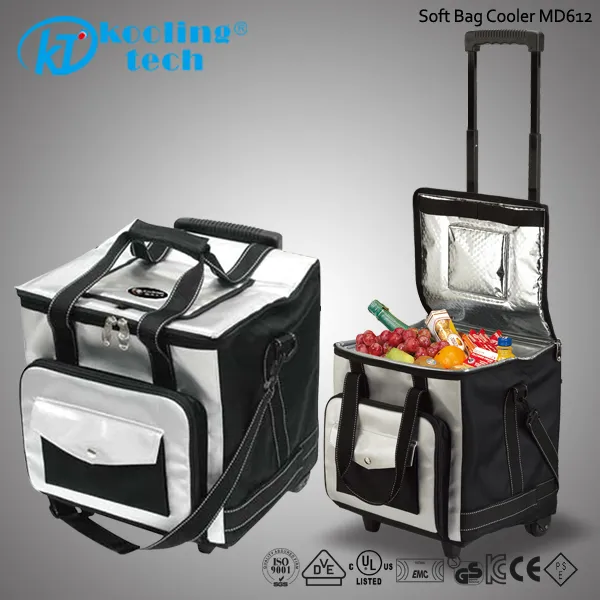
Photo: packed cooler with frozen food luggage airport, via image.made-in-china.com
There's a moment at every major airport's baggage claim that outsiders never quite understand. The carousel spins, suitcases tumble out, and somewhere in the crowd, a grandmother is quietly doing math. Not about weight limits — about grams. Because inside her hard-shell cooler, wrapped in layers of newspaper and frozen water bottles, sits roughly six kilograms of pork tocino, and she is praying it holds.
Welcome to the real meaning of pasalubong, the Filipino tradition of bringing home gifts from a trip. In theory, it's simple: you travel, you bring something back for the people who stayed. In practice, for Filipino-American families, it has become something closer to a small-scale cold-chain logistics operation.
The T-Shirt Never Stood a Chance
American travelers bring home magnets and mugs. Filipino travelers bring home tocino.
Ask around any Filipino-American household and you'll hear the same hierarchy. A keychain from a Manila gift shop? Nice, maybe. A box of dried mangoes? Better. Vacuum-sealed packs of longganisa from a specific butcher in Quezon City — the one with the garlic-heavy recipe your cousin swears by? That's the good stuff. That's the bag you carry on, not check.
There's a reason for this. Pasalubong isn't really about the object. It's about proof. Proof that you were thinking of the people left behind while you were away, and proof that some things — a particular sweet-salty cure, a brand of polvoron, the longganisa from your mother's hometown — simply don't exist on a shelf in Ohio or Texas. The gift says: I know you can't get this here, so I carried it 8,000 miles for you.
A t-shirt can't say that. A t-shirt doesn't melt.
The Logistics of Love (and TSA)
Here's what the operation actually looks like. Days before the return flight, a shopping run hits the wet market and the grocery for the non-negotiables: cured meats, dried fish, polvoron, banana chips, the coffee from the region your uncle won't stop talking about. Meats go into vacuum-sealed bags. Everything gets frozen solid — this is the crucial part, because rock-solid frozen food counts as a solid for security purposes, not a liquid or gel.
Then the packing. Frozen water bottles double as ice packs and as souvenirs-you-can-drink-later. Newspaper fills the gaps. A cheap styrofoam cooler might live inside a duffel bag, or a high-end roto-molded cooler becomes checked luggage itself, duct-taped shut and labeled with a home address. Old hands will tell you: pack the cooler to the brim. Air is the enemy. A full cooler stays cold twice as long as a half-empty one.
The rules, for anyone planning their first run: commercially packaged, shelf-stable goods like dried mangoes, candies, and crackers are a non-issue. Frozen, vacuum-sealed meats are generally permitted in both carry-on and checked bags on domestic legs, though they must stay frozen solid to clear security. International arrivals into the US are stricter — customs rules on meat products are real, and commercially canned or shelf-stable items are the safe play coming from overseas. Which is why so many families split the difference: the dried goods fly home from Manila, and the fresh longganisa gets sourced from the Filipino market near whoever's house the reunion is at.
What the Cooler Really Carries
Strip away the packing tape and the frozen water bottles, and what you have is a family maintaining its supply lines.
For immigrant families, the return trip from the Philippines is bittersweet by design — you leave one home to go back to the other. Pasalubong softens the landing for everyone. The relatives who picked you up at 11 p.m. get first pick of the polvoron. The neighbor who watered your plants gets a bag of dried mangoes. The kids who were toddlers last visit get a taste of a country they're too young to remember.
And there's a quieter exchange happening in reverse. Filipino-American kids flying back to visit lola in Pampanga learn to pack their own pasalubong — Oreos and Cheetos in flavors that never made it overseas, Costco-sized everything. The tradition runs both directions across the Pacific, in both directions of the heart.
Your Turn: A First-Timer's Packing List
If you've got a trip coming up and a family that expects more than a magnet, here's the starter kit:
- The shelf-stable champions: dried mangoes, polvoron, banana chips, instant tsokolate, regional coffee. Zero stress, maximum joy.
- The frozen core: vacuum-sealed longganisa, tocino, and tapa, frozen solid and packed tight. Freeze at least two days before the flight.
- The cooling strategy: frozen water bottles as ice packs, newspaper or towels as insulation, and a cooler packed completely full.
- The paperwork reality: check current customs rules for your specific route before you fly, and when in doubt, buy the commercially packaged version.
The t-shirts are fine. The magnets are fine. But when your cousin opens the cooler on your kitchen floor at midnight and finds the longganisa — the right longganisa — that's when the trip is officially complete.
Some souvenirs sit on a shelf. The good ones end up on a plate.