From Lola's Hand Crank to the Corner Scoop Shop: Filipino Ice Cream Is Having a Moment
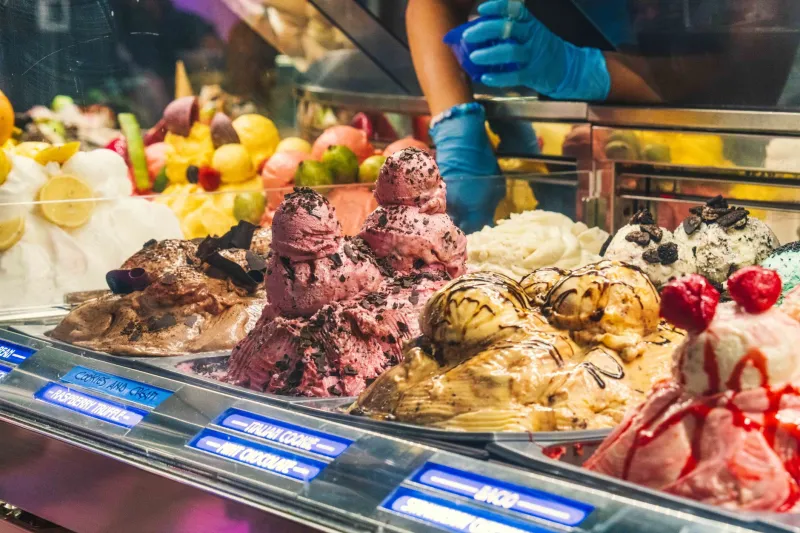
There's a moment happening in freezer cases across America, and if you've walked past an ice cream shop lately, you've probably noticed it: a violet-hued scoop staring back at you from behind the glass. Ube has officially gone mainstream — but the story of Filipino ice cream in the US started long before the purple went viral, and it started, like most good things, in somebody's kitchen.
The No-Churn Tradition Nobody Called a Trend
Long before countertop ice cream makers became a suburban status symbol, Filipino home cooks were making ice cream with nothing but a mixing bowl, a whisk, some serious forearm strength, and a freezer. No churner required. Condensed milk provided the sweetness and the body; whipped cream folded in by hand supplied the airiness. It was dessert engineering born of practicality.
And the flavors? They came straight from the pantry and the backyard market. Grated coconut steeped into buko ice cream. Ripe mangoes swirled with cubes of queso — yes, cheese — a combination that puzzles first-timers and converts them on the second bite. Purple yam, boiled, grated, and stirred into a base so deeply violet it looked like a Crayola experiment.
For many Filipino-American kids, that hand-churned batch was the soundtrack of family gatherings, churning away on the counter while uncles argued over karaoke and someone's grandmother insisted you eat a second plate of pancit.
From Family Freezers to Storefront Freezers
What's changed is who's doing the churning. Across the country, second-generation Filipino-Americans are opening creameries and dessert shops that treat these flavors not as novelties but as the main event.
In the San Francisco Bay Area and Los Angeles, scoop shops built entire menus around ube, buko pandan, and macapuno — that coconut sport variety with a texture like soft cheese and a flavor like sweet coconut dreams. Food trucks in Houston and Chicago roll out mango-cheese scoops in the summer, often with a line down the block. In New York, soft-serve windows swirl ube with matcha in a purple-and-green twist that looks like it was designed for Instagram — and honestly, it was, but it tastes like childhood for the folks who grew up on it.
The pattern is familiar to anyone who's watched Filipino food's slow, steady march into the American mainstream. It happened with bakeries in unexpected suburbs. It happened with ube showing up at Costco. Ice cream is simply the latest chapter — and arguably the easiest one to sell, because nobody needs convincing to try ice cream. They need convincing about the cheese. That's it. That's the whole barrier.
Why Mango and Cheese Actually Works
Let's address the queso elephant in the room. Cheese in ice cream sounds like a dare, but think about it: salted caramel, cheesecake swirl, the salt-fat-sweet trifecta in a pint of vanilla with cheddar on a slice of apple pie. Filipinos didn't invent the idea of cheese and dessert; they just committed to it harder.
In the classic version, sharp cheddar is cubed into a sweet mango base. The cheese doesn't melt into the mix — it stays in little chewy-salty pockets, cutting through the tropical sweetness. If you've ever had cheese with apple pie or a cheese board followed by dessert, your palate is already halfway there.
Five Flavors Worth Hunting Down
If you spot a Filipino or Asian-inspired creamery near you — and chances are increasing by the season — here's your game plan:
- Ube — The gateway. Nutty, vanilla-adjacent, and naturally purple. Skip anything dyed; real ube has a mellow, almost hazelnut sweetness.
- Mango-cheese (mango-queso) — The conversation starter. Salty cheddar pockets in sweet mango. Trust the process.
- Buko pandan — Young coconut with fragrant pandan leaf. Like a tropical breeze in scoop form.
- Macapuno — Coconut with a jammy, stringy texture. Coconut people, this is your Super Bowl.
- Halo-halo-inspired anything — Some shops turn the whole shaved-ice sundae into a flavor: beans, jellies, flan and all.
Make It at Home — No Machine Needed
Here's the beautiful part: you don't need a creamery or even an ice cream maker to join in. The old-school Filipino no-churn method is genuinely foolproof.
Basic no-churn base: Whip 2 cups of cold heavy cream to soft peaks. Fold in one 14-ounce can of sweetened condensed milk, a teaspoon of vanilla, and a pinch of salt. That's your canvas.
For ube, whisk 2–3 tablespoons of ube halaya (purple yam jam, available at most Asian groceries or online) into the condensed milk before folding. For mango-cheese, fold in a cup of ripe mango purée and scatter in small cubes of sharp cheddar during the final stir. For buko pandan, steep a few pandan leaves in warmed cream for 20 minutes, chill completely, then whip and fold in shredded young coconut.
Pour everything into a loaf pan, press parchment against the surface, and freeze at least six hours. It scoops beautifully straight from the freezer — softer than store-bought, because there's no machine-churned ice to fight through.
More Than a Trend
It's tempting to file all of this under "trend," the way food media does with anything purple. But for Filipino-American families, these flavors aren't a moment — they're a memory. Every scoop shop owner will tell you the same thing: half their customers come in curious, and the other half come in homesick.
So the next time you see that violet scoop in the case, order it. Ask the person behind the counter about their version. Chances are good there's a story about a grandmother, a hand mixer, and a kitchen that smelled like coconut — and now you get to taste it.